
When you need document photos—whether it’s for a passport, visa, driver’s license, or any official ID—choosing the right place to get them done is crucial. It might seem like a minor detail, but a bad photo can delay your application or even cause it to be rejected. Let’s dive into how you can make the best choice and avoid unnecessary headaches.
Why Getting the Right Document Photo Matters
Getting the right document photo is far more important than most people realize. It’s not just a simple snapshot of your face—it’s a critical part of official identification, and government agencies scrutinize these photos closely. A minor mistake, like a shadow across your face, uneven lighting, or the wrong background, can lead to your application being rejected. This means that even if you’ve filled out all the paperwork correctly, a single poorly taken photo could halt the entire process, causing unnecessary delays and frustration.
A proper document photo ensures that your identity is accurately represented. For passports, visas, and driver’s licenses, officials rely on the photo to verify who you are. If your picture is blurry, has an inappropriate expression, or doesn’t comply with official guidelines, it may not match your appearance during future inspections. This can lead to repeated trips to the photo studio, additional fees, and even delays in travel plans. In extreme cases, it could result in missed flights, denied entry to a foreign country, or postponed official appointments.
Beyond the practical consequences, there’s a psychological aspect to consider. Your document photo serves as a first impression for anyone who examines it, from border officers to administrative staff. A photo that looks professional, clear, and neutral communicates competence and attention to detail. On the other hand, a poorly taken photo—crooked angle, harsh shadows, or distracting background—can create an impression of carelessness, even if it’s entirely unintentional. Taking the time to ensure your photo is perfect shows respect for the process and avoids unnecessary stress later.
Finally, investing in a high-quality document photo is a simple way to save time and money. While DIY photos might seem convenient, they often lead to multiple retakes or rejections. Choosing a studio or service that understands official requirements minimizes the risk of errors. Think of it as an investment in efficiency: one well-taken photo can streamline your application, eliminate repeated trips, and give you peace of mind. In short, the right photo isn’t just a picture—it’s a key part of ensuring your documents are accepted without hassle.
Types of Document Photos in the U.S.
Before choosing a place to get your document photos done, it’s crucial to understand the different types of photos required for various documents. Each type comes with its own specific requirements, and not all photo studios or services can handle every kind. Knowing exactly what you need will help you avoid mistakes, save time, and ensure your photos are accepted by official institutions. Here’s a detailed list of the most common types:
- Passport Photos: These are the most common type of official document photos. Passport photos must have a neutral expression, with your mouth closed and eyes open. The background should be plain white or off-white, and your face must be fully visible. Glasses are generally not allowed unless medically necessary, and the size must be exactly 2×2 inches. These photos are strictly regulated by the U.S. Department of State, and even minor deviations can result in rejection.
- Visa Photos: Visa photos are required for international travel and often have stricter rules than passport photos. The background usually needs to be pure white, and the head size must fit specific dimensions according to the country’s embassy or consulate guidelines. The size and shape may vary depending on the destination, so it’s important to check the official requirements before getting your photo taken. Some countries require digital versions in addition to physical prints.
- Driver’s License Photos: Each state in the U.S. has its own rules for driver’s license photos. Typically, these photos capture your head and shoulders with a clear, neutral expression. The background may vary depending on the state, but it generally needs to be plain and free of distractions. Photos must be recent, often within six months, to accurately reflect your current appearance. Proper lighting and positioning are crucial to ensure your face is fully visible and your license is approved.
- Employment ID Photos: Many employers require ID photos for badges or security passes. These photos usually require a clear and professional image of your face against a plain or uniform background. Some companies have specific guidelines for dress code, lighting, or head positioning. The typical size is around 2×2 inches, though this can vary depending on the organization.
- School ID Photos: Schools, colleges, and universities often require photos for student identification cards. These photos must clearly show the face, with specific background requirements, sometimes matching the school’s branding guidelines. The size can vary by school, and photos often need to be updated annually. Proper lighting, clear focus, and adherence to school guidelines are key to acceptance.
- Specialized Document Photos: Certain documents, like professional licenses, government work IDs, or immigration papers, may require specific photo formats, head positioning, or digital submissions. These photos often have stricter compliance rules and may require studio expertise to ensure they meet official standards.
- Digital Photo Requirements: Some documents now allow or require digital photos uploaded online. These photos must follow the same standards as printed photos in terms of size, background, and facial positioning. Digital photos are often reviewed automatically by software, which makes compliance even more critical.
Key Factors to Consider When Choosing a Photo Studio
| Factor | What It Means | Why It Matters | How to Check | Tips |
| Accuracy and Compliance | Ensures your photo meets government standards for passports, visas, and driver’s licenses | Avoids rejection of your document photo, saves time and stress | Ask if the studio is familiar with official U.S. photo requirements | Confirm they follow the latest government guidelines and offer retakes if needed |
| Equipment Quality | Quality of camera, lighting, and background setup | Professional equipment produces clear, compliant, and visually correct photos | Observe the setup or ask about cameras and lighting used | Avoid studios using smartphones or makeshift lighting; check sample photos |
| Convenience and Accessibility | Location, hours, and ease of scheduling | Saves time and allows quick photo sessions, especially for urgent applications | Look up studio hours, accessibility, and whether they accept walk-ins | Choose a studio near your home or work with flexible hours |
| Price Transparency | Clear information about costs, packages, and extras | Prevents surprises and ensures you get good value | Ask for pricing upfront, including extra copies or digital versions | Be cautious of extremely cheap offers that may compromise quality |
| Reputation and Reviews | Online ratings, testimonials, and word-of-mouth feedback | Indicates reliability, service quality, and compliance success | Read Google, Yelp, or social media reviews; ask for referrals | Favor studios with consistently positive reviews and verified customer experiences |
Popular Places to Get Document Photos in the U.S.
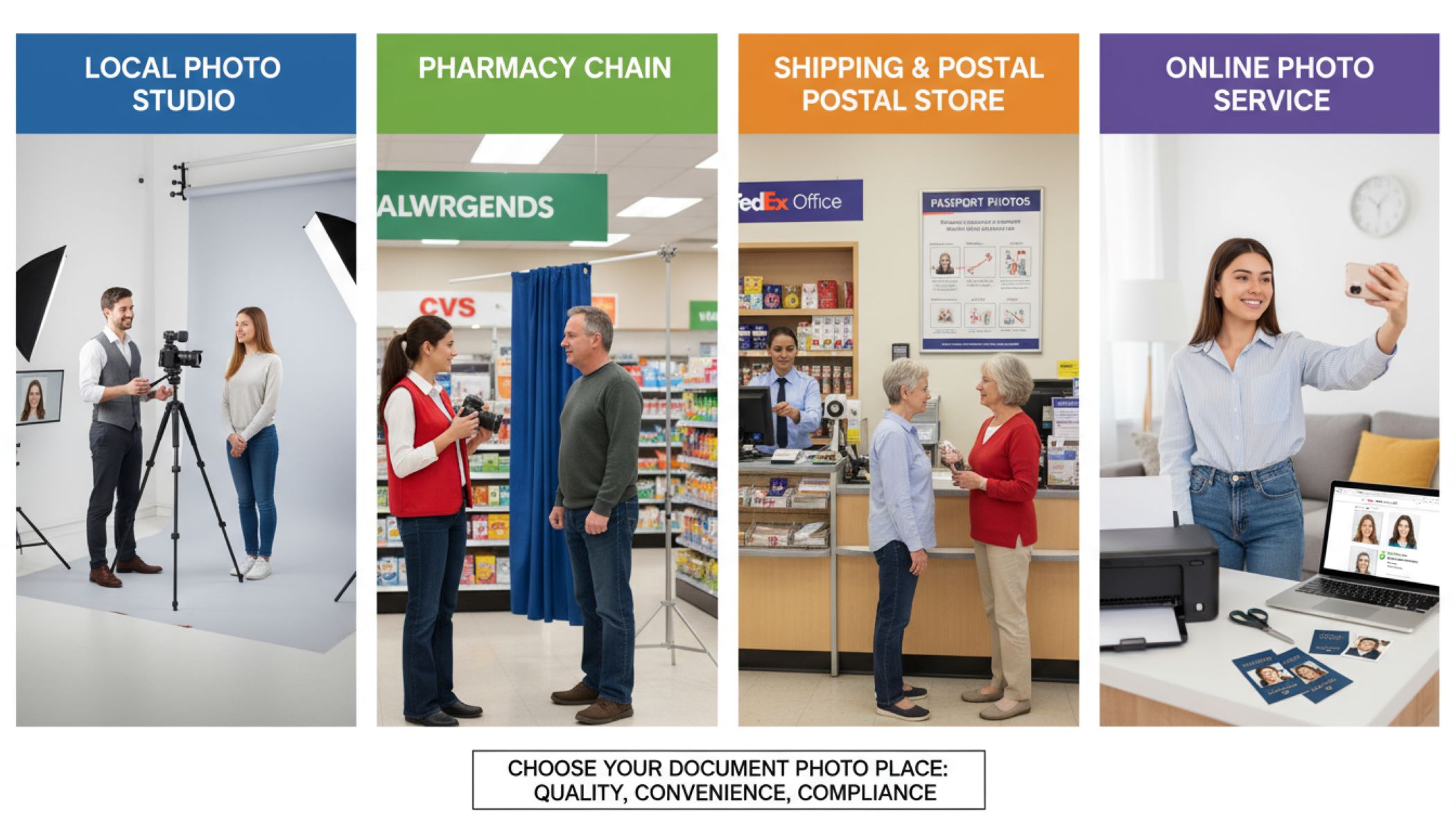
When it comes to getting your document photos, you have multiple options across the United States, each catering to different needs and preferences. Local photo studios are often the go-to choice for those seeking high-quality, professional images. These studios usually have experienced staff who are familiar with the strict requirements for passports, visas, and driver’s licenses. The equipment used—professional cameras, proper lighting, and neutral backgrounds—ensures that your photos meet official standards. While they can be slightly pricier than other options, the peace of mind that comes with guaranteed compliance often makes the investment worthwhile. However, limited operating hours can sometimes make scheduling inconvenient, especially for last-minute appointments.
Pharmacy chains like CVS, Walgreens, and Rite Aid offer another convenient option for document photos. These locations are easy to find, often open late, and provide relatively quick service. Many stores have staff trained to take standard passport or ID photos, making it an attractive choice for those needing a fast, accessible solution. That said, the quality can vary from store to store, and not all employees may be fully knowledgeable about strict government requirements. It’s always a good idea to verify that the store follows official guidelines before relying on these photos for critical applications.
Another reliable option is shipping and postal stores, including FedEx, UPS, and post offices. These locations often handle passport and official document services regularly, so staff are typically familiar with government photo standards. Photos taken at these locations are usually accepted for all official purposes, making them a safe choice for important applications. On the downside, prices may be slightly higher than pharmacies, and hours can be restrictive, especially at postal offices, so planning ahead is crucial. For individuals seeking convenience and guaranteed compliance, these stores strike a good balance between professionalism and accessibility.
Finally, online photo services have become increasingly popular, offering the ability to take compliant photos from home. You can upload a selfie, follow step-by-step guidelines, and receive printed or digital versions of your photo delivered to your doorstep. This method is highly convenient for those with tight schedules or limited mobility. However, it carries a higher risk of non-compliance if the instructions are not followed exactly. Additionally, shipping time can delay access to physical copies, which may be problematic for urgent applications. Online services are best suited for tech-savvy individuals who are confident in following precise photo requirements and prefer the convenience of home processing.
Questions to Ask Before You Book a Photo Session
Before heading to a photo studio, it’s important to ask the right questions to ensure your document photos meet official standards and that your experience is smooth. Here’s a detailed list of questions to guide you:
- Are your photos compliant with U.S. passport and visa standards? Make sure the studio is familiar with the official requirements, including size, background, facial expression, and head positioning. Compliance is critical to avoid having your photos rejected by government agencies.
- Do you offer retakes if the first photo is rejected? Even professional studios can occasionally make mistakes, so it’s important to know whether they provide free or quick retakes if the photo doesn’t meet official specifications. This can save you time, money, and frustration.
- How quickly can I get my photos? Turnaround time varies by studio. Some offer same-day service, while others may take a few days to provide prints or digital copies. Knowing this in advance helps you plan, especially if your document application is time-sensitive.
- What are your prices and package options? Studios may offer different packages depending on the number of prints, digital copies, or additional services. Ask for a clear breakdown of costs to avoid unexpected fees and to choose the option that best fits your needs.
- Do you provide digital copies as well? Many applications, especially for visas or online forms, now require a digital version of your photo. Check if the studio provides high-quality digital files in addition to printed copies, which adds convenience and flexibility.
- Do you follow specific guidelines for special cases? If you need photos for infants, children, or people with medical exemptions (like glasses or head coverings), ask whether the studio is experienced in handling these requirements.
- Can I see sample photos before booking? Reviewing sample photos gives you a sense of the studio’s quality, lighting, and background setup, helping you avoid surprises on the day of your session.
- Are walk-ins allowed, or is an appointment necessary? Understanding the studio’s scheduling policy can save you from waiting unnecessarily and ensures a smoother experience.
- Do you offer multiple sizes or copies in one session? Some documents require several copies or different sizes. Confirm whether the studio can provide everything you need in a single visit.
Understanding the Photo Requirements
| Document Type | Size Requirements | Background Requirements | Facial Expression & Position | Additional Notes |
| Passport Photos | 2×2 inches | Plain white or off-white | Neutral expression, no smile, face fully visible | Glasses generally not allowed unless medically necessary; strict U.S. State Department guidelines |
| Driver’s License Photos | Varies by state; usually head and shoulders only | Check state DMV for specific background rules | Neutral expression; full face visible | Must be recent, usually taken within the last 6 months; size and format vary by state |
| Visa Photos | Country-specific | Some countries require white background; others allow off-white | Head must fit certain dimensions; neutral expression recommended | Check embassy or consulate guidelines; some require digital submissions as well |
| Employment/ID Photos | Typically 2×2 inches | Uniform or plain background, often company-specified | Clear and professional, full face visible | Some employers provide specific guidelines for dress code or background |
| School ID Photos | Varies by school | Plain or school-specified background | Neutral, clearly visible face | Photos often updated annually; may require digital and physical copies |
DIY vs. Professional Studio: Pros and Cons
Many people consider taking their document photos at home as a simple, cost-effective option. DIY photos can indeed save money, as you avoid studio fees and can use equipment you already own, like a smartphone or home camera. It also offers convenience—you can take the photo anytime without traveling to a studio or waiting in line. For individuals with a tight budget or limited time, DIY might seem like the most practical solution.
However, taking photos yourself comes with significant risks. Government agencies have strict standards for official photos, including precise measurements, background color, head positioning, and facial expression. DIY setups often struggle to meet these specifications. Lighting can be uneven, shadows may fall across the face, and backgrounds might be too busy or inappropriate. These issues increase the likelihood of your photos being rejected, potentially causing delays in processing passports, visas, or other official documents.
On the other hand, professional studios offer a much higher level of reliability. Staff are trained to follow exact government guidelines, ensuring your photos are compliant. They use professional cameras, proper lighting, and neutral backgrounds, reducing the risk of errors. Additionally, most studios provide the option for quick retakes if the first photo doesn’t meet requirements. This gives you peace of mind, knowing that your document photos are unlikely to be rejected and that you won’t have to redo them multiple times.
The main trade-off with professional studios is cost and convenience. Professional services typically charge more than DIY, and you may need to travel to a studio location, which can be inconvenient if you live far from a well-equipped facility. Despite these drawbacks, the time saved, compliance guaranteed, and reduced stress often make professional studios the better choice—especially for passports, visas, and other documents where accuracy is non-negotiable. In short, while DIY can work in a pinch, investing in a professional studio is usually the safest and most reliable approach.